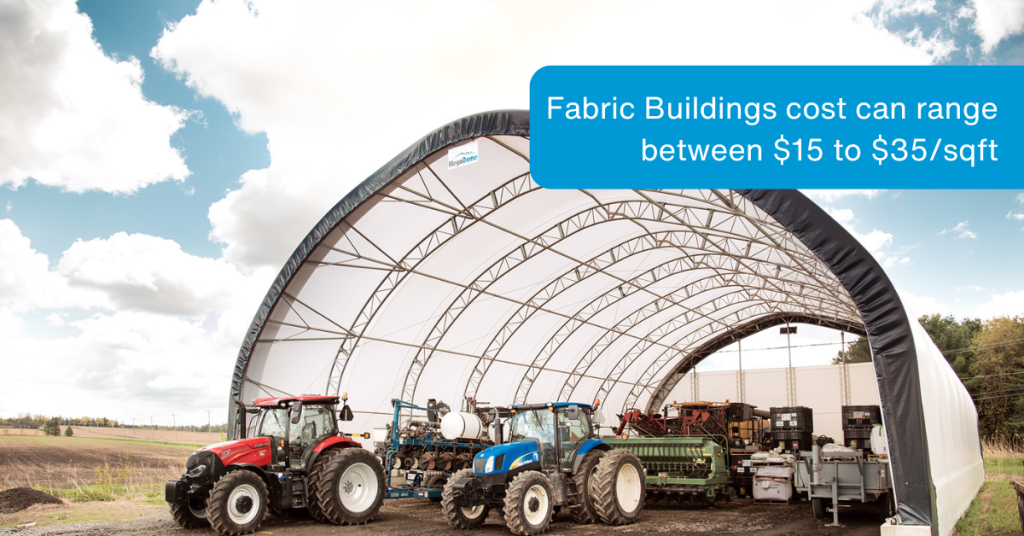
Typically, coverall fabric building cost between $15 and $35 per square foot installed, depending on size, foundation type, and options. A standard 40×80 structure runs approximately $48,000 for the kit, while a fully installed turnkey building with foundation and doors ranges from $52,000 to $102,000. Prices vary by region, series, and site conditions.
If you’re planning a coverall fabric building, one of the first questions is coverall fabric building cost (per square foot or total). In this 2026 guide, we’ll walk you through typical pricing, what drives costs, and real world examples to help you budget accurately
Evaluating the coverall fabric building cost between coverall fabric structures and conventional building materials like wood, steel, or concrete can be complex. Crucial to consider are both the immediate and long-term cost advantages, encompassing both direct and indirect expenses. Generally, fabric structures are more budget-friendly than traditional materials, offering savings in initial construction costs and ongoing maintenance.
Updated for 2026:
Coverall Fabric Building Costs below reflect recent changes in steel, fabric, and construction labor pricing.
Fabric vs Steel vs Quonset: Cost per Square Foot
| Factor | Coverall Fabric Building | Rigid-frame steel | Quonset (arch-steel) |
|---|---|---|---|
| Clear-span width | MegaDome models commonly 33–160 ft | Clear-span up to 300 ft typical with custom engineering. | Commonly 10–60 ft (some systems claim up to 100–125 ft). |
| Usable wall space | Straight sidewalls → good perimeter use. | Straight sidewalls → best perimeter use. | Curved walls reduce usable vertical sidewall area; shelving/tall gear at edges is harder. |
| Openings / doors | Large endwall or sidewall openings feasible. | Large endwall & sidewall openings typical. | Sidewall openings are limited (extra engineering/cost); most doors in endwalls. |
| Insulation | Often uninsulated; benefits from daylighting (lower daytime lighting loads). | Conventional blanket/rigid systems fit easily. | Spray-foam or custom solutions commonly used due to the arch; trickier than straight walls. |
| Build speed | Fast; some vendors cite up to ~2,500 ft²/day under ideal conditions. | Moderate; depends on size/insulation/finishes. | Fast for small sizes; kit simplicity is a plus. |
| Best fits | Bulk storage, municipal salt/sand, waste & recycling, equipment storage. | Long-term facilities with heavy cranes, mezzanines, complex MEP, or high insulation needs. | Budget-driven storage/garages where curved walls aren’t a limitation. |
See the full fabric building construction checklist.
Agricultural vs. Industrial: How Usage Affects Price
Depending on the specific applications and usage, such as industrial or agricultural, the Coverall Fabric Building Cost can vary. Agricultural fabric buildings may require additional features like enhanced ventilation and natural light optimization, while industrial fabric buildings might prioritize robust structural elements and specialized access points. These variations can influence the overall price, making it crucial to choose the right custom the building specifications to your unique needs for accurate cost estimation.
Compare agricultural fabric buildings requirements vs industrial storage.
What Drives Coverall Fabric Building Cost?
- Span & profile: wider/ taller = more steel.
- End walls & doors: overhead/stacker doors and framed openings move the needle.
- Loads & codes: wind/snow/seismic and permit engineering raise steel specs.
- Foundation: sonotubes vs grade beam vs precast blocks (site soils decide).
- Install: in-house vs turnkey; remote sites cost more.
- Options: ventilation, lighting/electrical, liner/insulation, corrosion protection.
- Market conditions: steel, freight, and regional labour volatility in Canada/US.
How Location and Building Codes Affect Cost
Where you build directly affects what your building costs.
Wind loads, snow loads, seismic zones, and frost depth requirements vary significantly across Canada and the United States. These variables determine the steel specifications, foundation depth, and permit requirements for your project.
A fabric building engineered for a high snow load region in Quebec requires heavier steel specs than the same footprint built in a milder climate zone. Coastal or high-wind sites trigger additional engineering requirements that affect both material and installation costs.
Every MegaDome project is reviewed by our in-house engineering team against location-specific climate data and local building codes, so your structure is sized and costed accurately from the start.
Coverall Fabric Building Cost per Square Foot
| Size / Type | Kit-Only Cost (USD/sq ft) | Installed Cost (USD/sq ft) | Estimated Total |
|---|---|---|---|
| 30′ × 60′ | $15 – $20 | $23 – $28 | $27,000 – $50,000 |
| 40′ × 80′ | $17 – $22 | $26 – $32 | $52,000 – $102,000 |
| 60′ × 120′ | $18 – $24 | $27 – $35 | $116,000 – $252,000 |
| 80′ × 200′ | $20 – $26 | $30 – $38 | $480,000 – $608,000 |
*Ranges derived from current industry guidance for tension/fabric structures; turnkey deltas benchmarked against typical steel building install ranges. Always quote your site
Understanding Coverall Fabric Building Costs
The price of a fabric building is influenced by factors such as material, labor, upkeep, electricity, and air circulation.
Material costs fluctuate based on project size and market prices. Although steel frames are initially more expensive than wood, wood structures often incur additional costs due to waste and sheathing. Factors like weather damage and pest infestations further increase the expenses for wood buildings.
Fabric buildings, which include steel in their design, are cost-effective, especially due to the fabric roof. While a standard steel building starts at 40$ per square foot, fabric buildings range from 15$ to 35$ per square foot.
Installation Labor Expenditures
Building any structure requires significant labour for installation. Fabric buildings typically require less labour than conventional construction due to simpler erection processes and fewer materials. Steel arches are assembled rapidly on-site, and the fabric cover is installed in panels or as a single piece depending on the system.
Installation for fabric buildings average 0.02 to 0.04 man-hours per square foot.
Installation for fabric buildings averages 0.02 to 0.04 man-hours per square foot — significantly less than rigid steel or wood frame construction. For a 40×80 structure, this translates to roughly 64 to 128 man-hours of installation labour, depending on site conditions, foundation type, and door configurations. Remote sites or locations requiring crane access may carry a labour premium.
Upkeep Costs vs Traditional Buildings
Traditional buildings made from wood, steel, or concrete often need yearly maintenance like painting, roofing repairs, or weatherproofing, which can be costly in terms of materials and labor.
Fabric buildings, in contrast, require less maintenance. The absence of screws or nails in the roof reduces moisture-related issues like leaks or rust. The steel frame in fabric structures is usually galvanized to resist corrosion, and the fabric itself is durable against rust and UV damage. Repair costs for fabric buildings are lower depending on what needs to be repaired.
Plan for membrane replacement and routine tension checks.
Translucency & Electricity Costs
Fabric buildings are designed to allow natural light to penetrate, reducing the need for artificial lighting. This design can save thousands in long-term lighting costs. At night, the fabric’s underside effectively disperses artificial light, further reducing the need for additional lighting fixtures. The potential for integrating solar panels adds to the energy efficiency of these structures.
MegaDome fabric buildings deliver 16% light translucency as standard, reducing or eliminating the need for artificial lighting during daylight hours, a direct and recurring cost saving over the life of the structure. For agricultural applications, MegaDome’s exclusive agricultural membrane reaches 30% translucency, providing significantly more natural light for livestock housing, riding arenas, and crop storage facilities at a comparable price point. No other fabric building membrane on the market combines that level of diffused natural light with the structural performance required for Canadian and U.S. climate conditions.
Natural vs Mechanial Ventilation Costs
Heating and cooling expenses are higher in conventional buildings due to the materials’ conductive properties. Fabric buildings, being non-conductive, maintain more consistent internal temperatures, reducing the need for extensive heating or cooling. Additional ventilation options like vents and air systems can be integrated into fabric structures to optimize air circulation.
Explore completed salt/sand domes and waste & recycling installs.
Does the cost include foundation and labor?
No. unless explicitly stated. Many quotes list “kit only” (frame + fabric), and you’ll need to add foundation, installation, permits, site work, doors, etc.
Warranty & Long-Term Value
The true Coverall Fabric Building Costs aren’t just the purchase price, it’s the total cost of ownership over the life of the structure. MegaDome backs every building with warranties that reflect the quality of materials and engineering behind each component.
The pre-galvanized steel frame carries a 15-year structural warranty. Structures built with hot-dip galvanized steel, the recommended option for corrosive environments such as salt storage, fertilizer facilities, and coastal or marine applications, are covered by a 20-year structural warranty. The fabric membrane is covered by a 20-year prorated warranty, reflecting the long-term durability of MegaDome’s polyethylene fabric against UV degradation, tearing, and weather exposure.
Combined, these warranties represent decades of protected performance and significantly reduce the long-term maintenance and replacement costs typically associated with conventional steel or wood structures.
Total Coverall Fabric Building Costs
At MegaDome by Harnois, tension coverall fabric building cost are offered at competitive prices ranging 15$ from 35$ to per square foot that will last between 15 to 30 years. Standard kits without end walls start as low as $15 per square foot, while more comprehensive setups with additional features may cost more per square foot.
The 40x80x20 coverall fabric building cost, for example, would be approximately $48,000
Considering the various factors influencing the cost of a fabric building is essential in developing a realistic budget. Our MegaDome team is ready to assist with replacements and upgrades for coverall fabric building across Canada: